Source Rotating Eco Friendly Glasses Display Rack for Shops, Hotels, and Supermarkets
Compare 30 rotating eco friendly glasses display rack options made from acrylic or metal. These units feature customizable sizes and colors for use in specialty stores, supermarkets, and hotels.
Key considerations
Products List





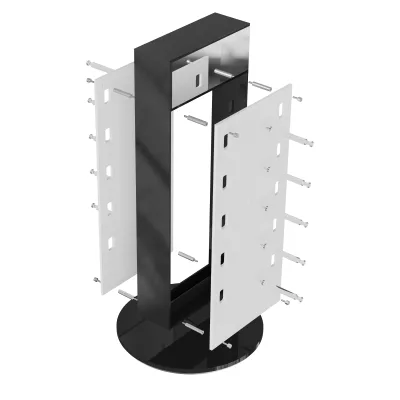
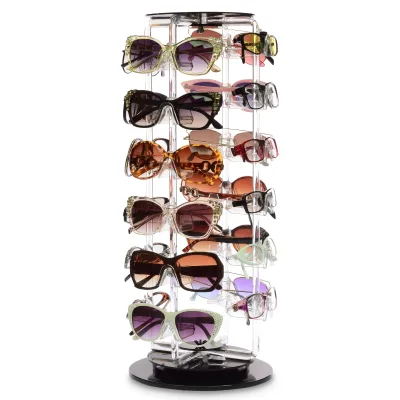
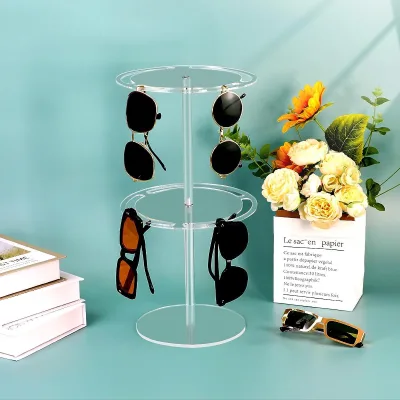

Comprehensive Sourcing Guide
Strategic Sourcing Guide for Rotating Eco-Friendly Glasses Display Racks
Understanding the Product Category and Core Attributes
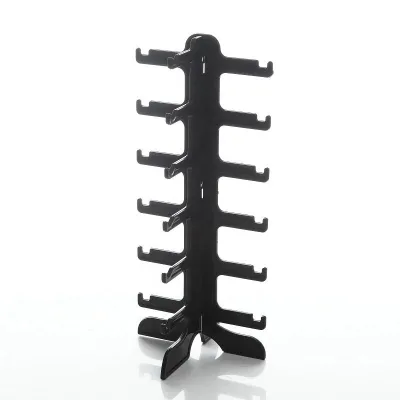
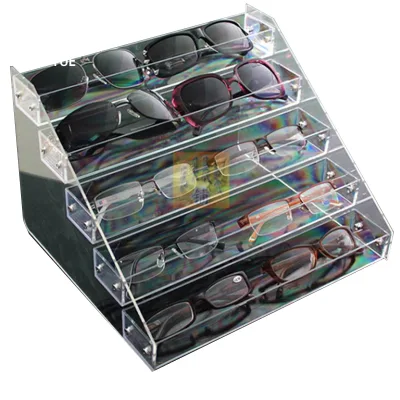
Sourcing a rotating eco-friendly glasses display rack requires a precise understanding of the intersection between functional retail hardware and sustainable material selection. The core keyword implies a unit designed for eyewear, featuring a rotational mechanism to maximize visibility, and constructed from materials that align with environmental standards. Based on available market data, the primary material observed for these units is acrylic, though metal variants are also prevalent in the sector. Acrylic offers a transparent, modern aesthetic that is highly valued in specialty stores and supermarkets, while metal constructions provide the structural integrity necessary for high-traffic environments.
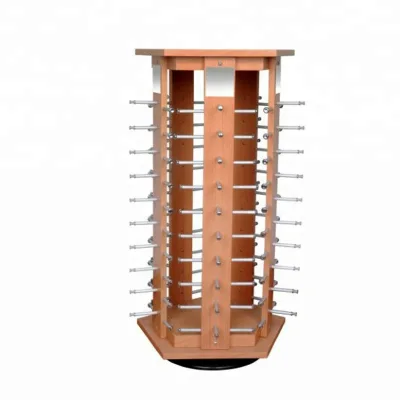
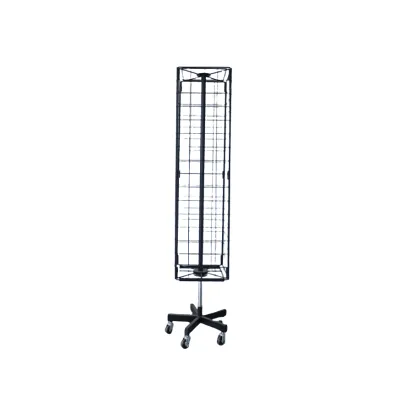
The "rotating" aspect is a critical functional specification. The observed product attributes indicate a "Connect" build method and a "Floor-type" style, suggesting that these units are designed to stand independently on the retail floor rather than being wall-mounted. The rotation capability is essential for "Exhibition Show" and "Speciality Stores" where space is at a premium, and 360-degree product visibility is required to engage customers. The "Eco-Friendly" designation in this context is supported by the observed feature set, which explicitly lists "Eco-Friendly" alongside "Good Quality" and "Durable." Buyers must verify that the specific acrylic or metal used meets local environmental regulations regarding recyclability and VOC (Volatile Organic Compound) emissions, as the term "eco-friendly" is a feature claim that requires validation against the specific supplier's manufacturing processes.
Technical Specifications and Customization Capabilities
When evaluating the technical specifications of a rotating display rack, the variability in dimensions and construction is a defining characteristic of this category. The market data indicates that "Size" is frequently listed as "Customized" or "Customzied," meaning there is no single universal standard dimension. Specific models observed, such as GND-AD-SGD109, have defined dimensions like W160xD50xH150mm, while others like GND-AD-SGD148 list standards in inches (7 5/8"x7 11/16"x9 9/16"). This disparity highlights the necessity for buyers to define their exact spatial requirements before engaging with suppliers. The "Standard" attribute for some units is explicitly "Customized," reinforcing that off-the-shelf sizing may not fit specific retail layouts.
Customization extends beyond dimensions to include branding and finish. The "Logo" attribute confirms that customization is available through methods such as Silk-Screening, UV printing, and Engraving. This allows retailers to integrate their corporate identity directly onto the display unit. Furthermore, the "Color" attribute states that "Any Customized Color Available," providing flexibility to match store branding or seasonal themes. The "Product Name" variations, ranging from "Sunglasses Display Rack" to "Eyeglasses Acrylic Retail Rotating Stand," suggest that the internal shelving or cradle design can be tailored to the specific shape and size of the eyewear being displayed. Buyers should request detailed CAD drawings or 3D renderings to ensure the custom size and rotation mechanism will not interfere with surrounding fixtures or customer flow.
Compliance, Certification, and Material Verification
Compliance and certification are paramount when sourcing display racks, particularly when the "Eco-Friendly" claim is central to the procurement strategy. The observed data lists "ISO9001" as a certification for multiple product entries, indicating that the manufacturing facilities adhere to international quality management standards. Some entries also list "UL" certification, which is crucial for electrical safety if the display rack includes integrated lighting, although the core rotating mechanism described here appears to be mechanical. The presence of "ISO9000" in background knowledge suggests a broader context of quality systems, but buyers should prioritize the specific "ISO9001" certification observed in the product listings.
Material verification is the next critical step. While "Acrylic" is the primary material noted, the "Eco-Friendly" claim necessitates a deeper inquiry into the source of the resin. Buyers should request documentation confirming the material's recyclability and the absence of harmful additives. For metal variants, the "Material" attribute simply lists "Metal," requiring clarification on whether it is steel, aluminum, or an alloy, and whether it is sourced from recycled content. The "Standard" attribute for some units is "Customized," which implies that the supplier may not adhere to a rigid industry standard for the base material but rather to the buyer's specific environmental requirements. Therefore, the procurement process must include a request for Material Safety Data Sheets (MSDS) and third-party test reports regarding the environmental impact of the finished product.
Cost Drivers and Procurement Economics
The cost structure of rotating glasses display racks is influenced by several distinct variables, including material selection, customization complexity, and order volume. The observed price range in the market spans from 0.62 to 600 USD, a wide disparity that reflects the difference between simple acrylic stands and complex, custom-engineered metal units with advanced rotation mechanisms. The "MOQ" (Minimum Order Quantity) range of 1 to 2000 units offers significant flexibility. The attribute "Small Quantity Accepted" suggests that buyers can initiate orders with low volumes, which is beneficial for testing new retail concepts or for boutique stores with limited floor space.
Lead time is another significant cost driver. The data indicates a production lead time of 3-15 days for samples and 25-40 days for full production. This timeline can extend if the "Customized" standard requires unique tooling or if the "Eco-Friendly" material sourcing involves longer supply chains. The "Sample" attribute notes a timeline of 7-10 days for some suppliers, while others list it as "Avilable," implying immediate availability for standard models. Buyers should factor these lead times into their inventory planning to avoid stockouts during peak retail seasons. Additionally, the "Shipment" options of Ocean Shipping, Airlift, and Express will impact the final landed cost, with air freight being necessary for urgent, low-volume orders and ocean shipping being more economical for bulk procurement.
Typical Applications and Usage Scenarios
The versatility of rotating glasses display racks makes them suitable for a diverse range of applications. The "Usage" attribute explicitly lists "Exhibition Show," "Speciality Stores," "Supermarkets and Stores," and "Home." This broad applicability means the same product category can serve a trade show booth, a high-end optical boutique, a mass-market retailer, or a residential setting. The "Application" attribute further specifies "Shops/Hospital/Companies/Hotels/Restaurants/etc.," indicating that these units are robust enough for high-traffic commercial environments.
In "Speciality Stores," the "Rotatable Storage Display Stand" allows for efficient use of floor space while showcasing a wide variety of eyewear models. The "Eco-Friendly" feature is particularly appealing to specialty retailers who wish to align their brand values with sustainability. For "Exhibition Shows," the "Good Quality" and "Durable" attributes ensure the unit can withstand frequent assembly and disassembly. The "Antitheft" attribute varies, with some units listed as "Not Antitheft" and others as "Antitheft." Buyers must assess the security needs of their specific location; high-theft areas may require models with integrated locking mechanisms or anti-theft features, while open-plan exhibitions might prioritize ease of access.
Supplier Evaluation and Quality Control Protocols
Evaluating suppliers for rotating display racks requires a rigorous assessment of their manufacturing capabilities and quality control processes. The "Location" attribute identifies "China" and specifically "Jiangsu, China" as origins, which is a major manufacturing hub for acrylic and metal products. Buyers should verify the supplier's capacity to handle "OEM/ODM" requests, as the "OEM/ODM" attribute is marked as "Accepted." This capability is essential for companies seeking custom branding or unique design modifications.
Quality control should focus on the durability of the rotation mechanism. The "Build Method" is listed as "Connect," which implies a modular assembly. Buyers should request evidence of stress testing for the rotating joint to ensure it does not loosen over time. The "Prototyping" attribute mentions timelines of "1 Year" and "5 Years," which likely refers to the warranty or expected lifespan of the prototype design rather than the production time. Buyers should clarify this metric to understand the long-term reliability of the product. Additionally, the "Package" attribute lists "Carton, Wood Box, Plate," indicating that packaging can be customized to protect the unit during shipping. Inspecting the packaging quality is a vital step in the quality control process to prevent damage during transit.
Long-Term Procurement and Sustainability Considerations
Long-term procurement of rotating glasses display racks involves more than just the initial purchase; it requires a strategy for maintenance, scalability, and environmental impact. The "Customized" standard and "Customized Size" attributes suggest that as a retailer's inventory grows or changes, the display units may need to be reconfigured or replaced. Buyers should prioritize suppliers who offer modular designs that allow for the addition of shelves or the modification of the rotation speed.
Sustainability is a key long-term consideration. While the "Eco-Friendly" feature is observed, buyers must ensure that the supplier has a plan for the end-of-life disposal of the units. Acrylic is recyclable, but the process requires specific facilities. Metal is highly recyclable, but the coating and finishing processes must also be environmentally sound. The "Production Lead Time" of 25-40 days for production suggests that suppliers have established supply chains, but buyers should inquire about the carbon footprint of their shipping methods. By selecting suppliers with "ISO9001" certification and transparent material sourcing, buyers can ensure that their procurement strategy aligns with corporate sustainability goals. The "Sample" availability allows for a phased approach to procurement, where initial small orders can be tested for durability and environmental compliance before committing to large-scale production runs. This approach mitigates risk and ensures that the rotating display racks meet the evolving needs of the retail environment.
FAQs
Can I customize the size and color of the display rack?
Yes, the size and color are fully customizable to meet your specific needs. You can request any customized color and dimensions, with specific models like GND-AD-SGD109 offering defined sizes while others allow fully custom specifications.
What certifications do these rotating display racks hold?
Many of these units hold ISO9001 certification, and some variants also include UL certification. These standards indicate adherence to international quality management systems, ensuring the manufacturing processes meet rigorous safety and quality benchmarks.
How long does production take for a custom order?
Production lead time typically ranges from 25 to 40 days for full production runs. Sample production is faster, usually taking between 3 and 15 days, allowing you to verify quality before committing to a larger batch.
What materials are used to build these display stands?
The primary materials observed are acrylic and metal, offering different aesthetic and durability profiles. Acrylic provides a transparent modern look, while metal variants ensure structural integrity for high-traffic environments like supermarkets and exhibition shows.
Is the minimum order quantity flexible for small buyers?
Yes, small quantity orders are accepted, with MOQs ranging from 1 to 2000 units depending on the supplier. This flexibility allows boutique stores or new businesses to test the product without committing to large initial inventory volumes.
Where are these display racks manufactured and shipped from?
These products originate from China, with specific manufacturing hubs noted in Jiangsu. Shipping options include ocean freight, air lift, and express delivery, providing flexibility based on your urgency and budget constraints.
Can I add my logo to the display rack?
Yes, logo customization is available through methods like silk-screening, UV printing, and engraving. This feature allows retailers to integrate their corporate identity directly onto the unit, enhancing brand visibility in specialty stores and exhibitions.